Showing posts with label stillness. Show all posts

Wednesday, September 7, 2016

Still catching up

On learning to be idle:

“Never do today what someone else can do tomorrow.”   In the same category is an Italian saying il bel far niente, or, “the beauty of doing nothing”.  These adages seem to advocate laziness, selfishness and irresponsibility, but I think there’s a deeper wisdom at play. Doing nothing is good for us.

The pace of our life is not particularly conducive to doing nothing. We frown upon idleness.  Previous generations grew up with the proverb “idle hands are the devil’s tools”, and associated idleness with falling into temptation and causing trouble. Today, we associate it with a lack of ambition and laziness.  Western society has conditioned us to believe that we must be constantly busy, and that busyness gives us value as individuals.

Even when we are wasting time, we like to appear busy.  Take our obsession with checking our cell phones as an example.  Some research has found that people check their phone on average 85 times per day and spend almost one third of their time using their phone.  Checking our phone gives us something to do; it keeps us busy.

We could condemn “never do today what someone else can do tomorrow” as procrastination. Or, we could consider it to be a playful philosophy that nurtures an appreciation for life, and helps us to find something extraordinary in the ordinary.  So, while it may be a poor strategy for getting things done, il bel far niente is a good strategy for restoring the spirit and bringing a sense of joy to our daily activities.

The beauty of doing nothing makes me think of the Jewish account of creation. It is a story mostly about work, but also about rest.  Every day for six days, God labours to bring a new idea to fruition. God fashions the heavens and the earth, day and night, land and sea, plants, animals, and finally humans. On the seventh day, delighted with the work, God does nothing; he hangs out in the garden with the man and the woman.

God, I imagine, enjoyed the break from work and found it to be very good. Looking at work and rest in this way, doing nothing becomes a spiritual imperative. It is necessary for the well being of the human spirit.

Paradoxically, doing nothing requires that we do something. This makes holidays a prime time to explore various ways of being idle without feeling guilty.  So, on a recent vacation, after giving myself permission to be lazy, selfish and irresponsible, I searched out moments of idleness.  Some of those moments involved playing cards and board games with my family. Other moments were solitary, sitting quietly listening to the sounds of the world around me or watching the play of light on the water. But, one moment in particular showed me that doing nothing could be unexpectedly beautiful.

I was having a leisurely swim in one of the spectacular mountains lakes of the West Kootenay region of British Columbia. Typically, I approach swimming as a form of exercise. My goal is usually to swim lengths as fast as I can for as long as possible.  But this day, my mindset was different.  


As I glided through the water, I noticed the spectrum of blue in the sky above.  At one end of the spectrum was the classic deep blue of a Kootenay summer that I know so well.  At the other was the pale white blue that characterizes the Italian sky but which I had never noticed here before. It was an extraordinary moment of awareness while doing something very ordinary. I would have missed it but for il bel far niente. 

There is a spiritual intuition at the heart of doing nothing; periods of leisure enrich our soul, nurture our relationships and increase our awareness of creation.   There is nothing lazy, selfish or irresponsible about doing nothing some of the time.
“Idle hands…” I don’t think so.

Friday, October 2, 2015

The blessings of a staycation


 A typical back to school assignment, when I was a kid, was to write about our summer vacations. I never much liked the topic. My summers, with a few notable exceptions, were pretty much indistinguishable from each other. I had nothing much to write about, or so I thought. At the time, I did not realize that the spirit of a vacation is sometimes more important than its activities.

Image courtesy of nenetus at freedigital photos.net
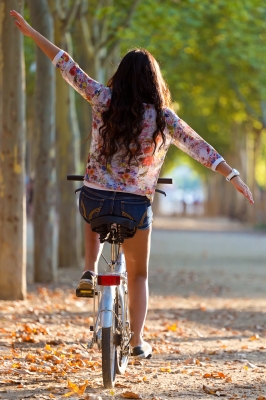
I spend the summers of my childhood at home, doing ordinary things - eating peanut butter sandwiches on the porch, sipping Kool-Aid, swimming at the local pool, riding my bike, and playing outside after supper until the street lights came on.  Once in awhile, my family ventured into the hills to pick huckleberries, or headed off, grandparents in tow, for a picnic at a lake or near a stream.

We were masters at the staycation, long before the concept became trendy.


This staycation deepened my definition of hospitality
By chance, I took a staycation this summer.  It came upon me in the form of a seventeen-year-old relative who was studying English at a nearby college.  She had weekends free. We spent them together, swimming in lakes and hot springs, wandering local markets, picnicking in parks, visiting local heritage sites and canoeing at a wildlife sanctuary.  Left to my own devices, I would have spent the hot, dry weekends languishing in the shade with a book and I would have been the lesser for it.

Playing tour guide in my own backyard had the benefits typically associated with the staycation. I visited local sites that I had not previously toured, took advantage of local recreation, and supported the local economy. My visitor’s enthusiasm for the things that I considered ordinary and ho-hum renewed my appreciation for familiar places and landscapes. My staycation also had the added benefit of deepening my understanding of hospitality and building a friendship.

Initially, at least in my heart, I was a reluctant tour guide. As I extended myself, I became more generous in spirit.  Something that felt like an obligation at the outset turned out to be a blessing. Hospitality, I discovered, not only includes acts of generosity that everyone can see, like inviting someone to dinner or showing them the sights. It is also an attitude of the heart that enables us to joyfully meet the needs and receive the gifts of the other person.  

A smokey horizon brought calm

A few weeks after the departure of our visitor, my family headed off for a two-week vacation at a nearby lake.  The first week was glorious with sunny, blue skies, but then the wind shifted and the smoke from multiple forest fires settled in. Poor air quality forced us to spend the bulk of the second week indoors.  With weather conditions less than ideal and a sense of confinement pressing upon us, the enforced family togetherness could have resulted in frayed tempers. But, like my unplanned staycation, it turned out to be a gift.

The smoke seemed to muffle sound, slow time and created stillness. It literally shrunk the horizon before us, limiting our view to a few feet beyond the edge of the dock. And with the shrunken horizon, the haze brought a strange sort of calm that stood in direct contrast to our ordinary lives.  Normally consumed with getting things done (including jumping in the lake several times a day to swim laps between the buoys), we were forced to slow down. The shrunken visual horizon expanded the interior horizon of the heart; it fanned a spirit of comity among us as we waited optimistically for a benevolent wind (that never came) to clear the skies.

This summer, I found gifts in unexpected circumstances. A staycation renewed my appreciation for the familiar and nurtured a more generous heart. A hazy horizon reminded me that there is purpose in stillness and a beauty in doing nothing. 

Photo courtesy of M.L.


Saturday, August 6, 2011

Stillness

Finding rest in stillness

Play
I chuckled as I ran by the local elementary school on a hot sunny day in late June. I don’t typically laugh when I’m running; I’m usually too busy gasping for air to even think about laughing. But this particular day, my heart laughed as I jogged by. 

It was sports day. Various stations were set up in readiness for the day’s events. The stations looked fun and I felt a childlike desire for play.

A few years ago, educators in the United Kingdom undertook an experiential study on play. A number of concerns prompted the study: high stress levels and depression in young children, poor academic performance, poor behavior, and inadequate social skills.
The educators made some remarkable discoveries when they equipped the playground with simple, everyday objects suitable for imaginative play. Student creativity increased. Playground fights decreased. Academic performance improved. Self-esteem rose; students took more risks academically and socially. Children were happier and less stressed when they had time for unstructured play.

That morning as I ran, I considered that as adults we either do not play enough, or our play fails to provide any measurable benefits. 

There are obvious reasons why adults ignore the importance of play. Family commitments, work, chores, and deadlines take priority over recreational activities. The expectations we impose on our self, or those that others impose on us, dominate our time.

When we do engage in leisure activities, we may not feel rested or refreshed. That round of golf was frustrating, the motor on the boat malfunctioned, or the kids were fighting. Despite all the money and time we spend on recreation, we often remain dissatisfied. 

Something, it seems, is lacking in our attitude towards leisure.

Sabbatical living
We can liken leisure to the biblical concept of the Sabbath. The Biblical explanation for the Sabbath goes back to the creation myth of Genesis. God created the earth in six days, and rested on the seventh. If rest was good for God, it was also good for people.

Initially, the Sabbath was a day of rest for everyone, including beasts of burden. Over time, a concept of sabbatical living evolved. The concept encompassed rest and relaxation, celebration with others, and sharing in God’s divine life. Periods of worship gave the individual and the community opportunities to pause, reflect, and connect with God. Attitudes of joy and thankfulness permeate sabbatical living.

The concept of sabbatical living reaches its fullness in the example and teaching of Jesus. When the Pharisees accused Jesus of breaking Sabbath laws, Jesus replied, “The Sabbath was made for humankind” (Mark 2.27). Work and rest both have a purpose and fulfill a need in human life.

The Gospels record instances of Jesus working hard, going off for a meal and a glass of wine with his buddies, and withdrawing to a remote place to pray. Jesus balanced work, recreation, and leisure as a spiritual discipline. As a spiritual discipline, leisure was a form of personal re-creation that energized Jesus to return to his ministry with vigor and passion.

Leisure nourishes spirituality


Leisure can be for us a practice that nourishes spirituality, but it demands a shift in our attitude towards time. In a culture that often judges a person’s worth by the activity of their smart phone, leisure teaches that constant availability and activity is detrimental. In a society that makes a competition of busyness, leisure says to slow down.


In today’s social environment, we may feel compelled to buy into the busyness, even with our leisure time. Our vacations sometimes become such a swirl of activity that we return   home needing a rest.

Leisure encourages us to seek rest for our souls, to listen to the sounds outside of our self, and to see the world beyond our self.

Leisure asks that we stop running so that we might breath in deeply of the stillness that makes us receptive to God. In stillness, we encounter the presence of God in our self, in others, in our activities, and in the world around us. In stillness, we temporarily transcend our concerns. We re-emerge with new vision and energy.

If we approached leisure as a spiritual discipline that nourished stillness, I suspect that we would experience benefits similar to those that the children in the study experienced from play. If we could learn to rest our weary self in God, we would become more creative, productive, self-possessed, selfless, joyful and holy.